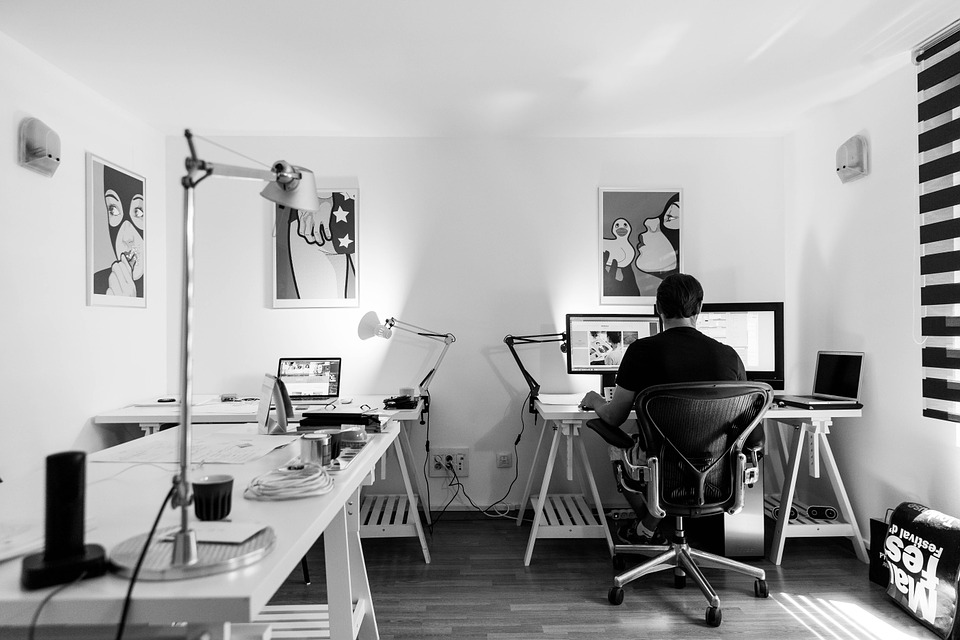
“I have three desks. One empty for paperwork, one for the internet and email, and one for the writing computer.”
—Lee Child
This week, I had the opportunity to be a guest on the On The Same Page podcast for the Marian University Writing Center. On it, I was interviewed by the center’s Assistant Director Aaron Wilder on the topic of “Writing With Anxiety.”
I answered lots of questions about the anxiety I face as a writer. We talked in terms of writing and time management. Mr. Wilder, in turn, provided real-world practices that might better help me get a hold on my anxieties. Among his list of solutions, he brought up the importance of having a conducive atmosphere to write. Allegedly, having a comfortable space tailored only to writing can have far-reaching effects.
This solution got me to thinking, “I wonder how many other students feel anxious about their writing assignments or personal pieces.” If you are among that population, I ask you: “where do you normally write?” If you said, “lying in bed” or “somewhere on the first floor of the library next to friends,” you may want to consider a brand new study space or even customizing your own in your dorm/apartment/house.
How The Space Makes or Breaks A Writer

Credit: <https://www.pexels.com/photo/people-coffee-meeting-team-7096/>
Our ability to focus is dependent upon our unique preferences, as some of us prefer it to be completely silent while others of us congregate in Alumni Hall. But ultimately all of us go sit down somewhere to specific to work because we value the growth in our education and wish to do well.
Similarly, we can only write well if we are in productive spaces. Think of it as the same reason why grade school educators continue to have their classrooms organized a certain way (with the wall decorations, bookshelves, and arrangement of desks). They want to build a classroom that improves and supports students’ well-being and productivity.
Now that we’re busy adults, it makes sense that we want to be more focused, motivated and productive in our own special spaces. Thus, I compiled advice from that may help.
Learning to Organize Your Space On and Off-Campus
Differentiating Writing Spaces from Study Spaces
You’re probably well aware of all the designated study places and academic buildings (cause Marian is pretty small). So if you spend time studying at Starbucks, the library or the Evans Center, the likelihood is that you found your studying niche.
But research indicates that designing a digital or physical workspace outside of normal study places can prove beneficial for writing. Standout Books Publishing Service defines a dedicated writing space as “a strange, magical area in which you feel particularly able to commune with your muse… It’s something about the space, the view, the ambiance, but it lets you write.” Such a space is probably not the same place you study, but a place free from distraction.
Designing A Space to be Distraction-Free
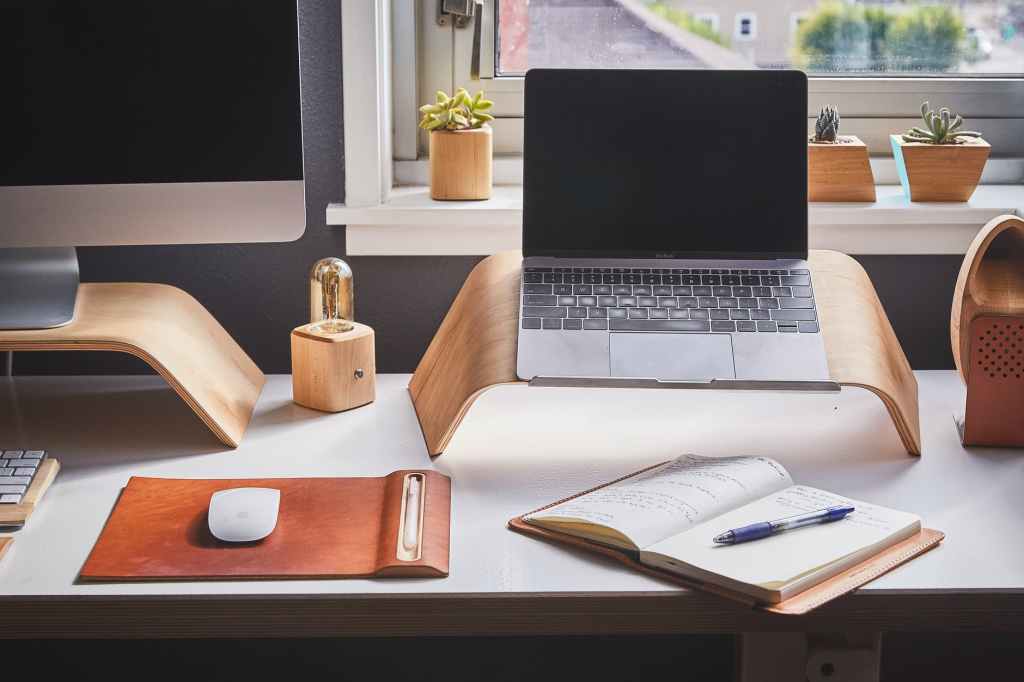
Credit: <https://ourhappyhive.com/setting-up-your-home-office-for-maximum-productivity/>
Whether you decide you want to set up shop in your place of living or a special place on campus, consider eliminating the following distracting items:
- Phone, tablet, computer (unless you need any to write)
- Numerous open tabs
- Junk foods rich in carbs and fat (not to sound like a nutrition Nazi, every site I look at encourages brain food)
- Television, radio or Bluetooth speaker (depends…)
- Other people (unless your freakin’ Ray Bradbury)
You also don’t want to make your writing place across campus, go there and then forget a key item. The following are some good (and optional) study space items either for your study space in your living area or across campus:
- Paper products: notebook, index card, journal, pad of paper, etc.
- Pencils or pens (I recommend more quality pens so you’re not distracted by the suckiness of the cheap Bic pens)
- Good desk lamp (optional: I recently bought Smart Wi-Fi LED Bulbs for $12 at Walmart that you can adjust brightness and color with your phone. Just a thought)
- A water bottle or cup of coffee
- Headphones or earbuds (consider relaxing or energetic instrumental music depending on your mood)
- A kitchen timer (or regular timer so you can set a certain amount of time to just focus on writing)
Experimenting With Natural Light & Temperature
What has worked especially well for me is finding a spot that has lots of natural light. I am not super outdoorsy, so year-round I have written in front of my balcony so my paper is visible and I can adjust my apartment’s thermostat to the ideal temperature.
Though you won’t always have control over the thermostat, studies us that temperature influences work productivity These studies, as reported by College Info Geek, indicate that on average a person works most efficiently when the temperature is between 72°F and 77°F.
So, if you think the temperature will be below the minimum, consider a sweater, or wearing a T-shirt if it’s over the maximum. But wherever you decide to set up, make sure that you have access to everything you need and that you will be comfortable working there for a certain period of time.
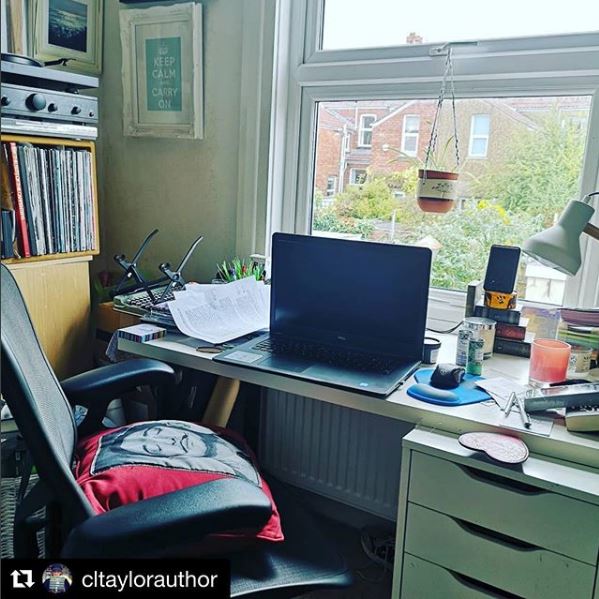
Instagram Credit: <https://www.instagram.com/p/B7Ln_yehnqD/>
Miscellaneous Study Space Tips
There are many methods for creating an effective study space. People have gotten so creative with it, even using social media and websites to show off their pride. To add it to the conversation, I wish to give you some of my techniques from my desk to yours. These work best with your own desk:
- Use a smart speaker like Google Home or Alexa to speak voice commands that will aid the writing process. For me, I use my Google Home to lower my music to optimal sound, for definitions/synonyms/antonyms of words, and to listen to writing-related podcasts for inspiration. I do this so I don’t get distracted by my phone.
- Candles are a great, relaxing measure, but since they pose a fire hazard in dorms on campus, refrain from using them. Instead, consider an electric, battery-operated candle that helps set the mood. If you have your own place, light up a real one! Consider a good scent that will alleviate stress.
- I am so extra, but if you have a Smart TV or one that connects to the Internet, put on a virtual fireplace or a virtual run video. It lets your mind wander with the sounds and sights and pump in the creativity.
- I sometimes struggle to write with music on (esp. with Spotify ads). As a substitute, I sometimes use Coffivity or Rainy Mood. A peer-reviewed University of Chicago study suggests that listening to these programs can contribute to efficiency.
So now that you have finished this article, I now ask you: how will you write from here on out?”














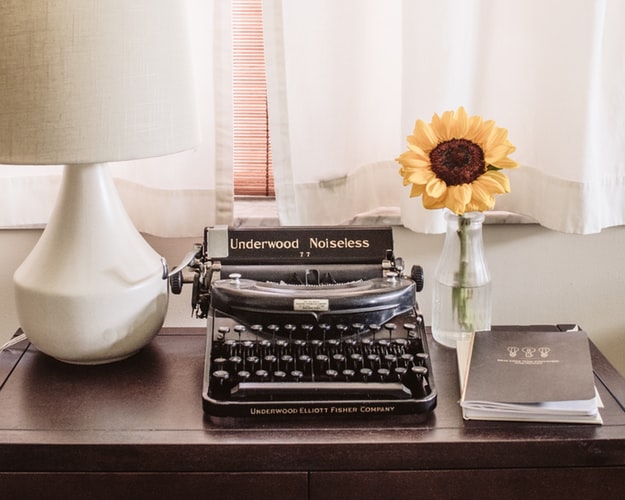
 The Writer's Desk

Hi, Dr. O here. Great job! This was an excellent first post. I’m invested in the blog and the subject.…